
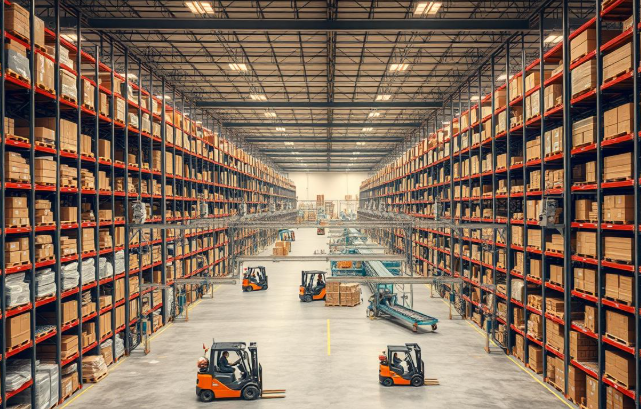

It’s one of the last things most warehouse managers think about when planning an upgrade, but poor lighting creates a cascade of problems that touch nearly every part of daily operations. Investing in proper warehouse lighting solutions for facilities isn’t just an aesthetic choice—it directly affects worker safety, pick accuracy, energy costs, and even employee morale over the long run.
The numbers tell a pretty convincing story. Facilities that switch from older metal halide or fluorescent lighting to modern LED systems typically see energy costs drop by 40 to 60 percent almost immediately. Beyond the savings, LED fixtures reach full brightness instantly, hold their output level consistently over their lifespan, and require far less maintenance than older technologies. For a warehouse running two or three shifts a day, those operational advantages add up to a meaningful reduction in overhead without requiring any change to daily workflows.
Safety is the part of the lighting equation that gets underestimated most often. Dim or uneven lighting in pick aisles, dock areas, and high-traffic zones creates conditions where workers misread labels, miss hazards underfoot, or misjudge clearances when operating equipment. The occupational safety guidelines for warehousing outline specific minimum illumination levels for different facility zones, and many older warehouses fall short of those thresholds without their managers even realizing it.
Smart lighting controls take the ROI even further. Motion-sensor systems that dim fixtures in unoccupied aisles, daylight harvesting that adjusts output based on natural light coming in through skylights, and programmable zone controls all reduce consumption without any sacrifice in worker visibility or comfort. These systems have come down dramatically in cost over the past few years, making them accessible for mid-sized operations that previously couldn’t justify the investment.
Color rendering is another factor worth paying attention to, especially in facilities where workers need to distinguish between similar products, read small label text, or identify subtle differences in condition or packaging. High color rendering index lighting makes those tasks noticeably easier, which translates to fewer errors and faster throughput in picking operations. The certified energy-saving LED bulb information is a practical starting point for any facility evaluating specific fixture and bulb specifications before making purchasing decisions.
If your facility’s lighting plan was designed more than a decade ago, chances are it’s overdue for a reassessment. A lighting audit, which many suppliers and utility providers offer at no cost, can identify exactly where improvements will deliver the biggest returns and help you prioritize upgrades in a way that fits your budget timeline. It’s one of the lower-risk investments in warehouse operations, with a payback period that almost always surprises people on the short end.