
As artificial intelligence reshapes how societies interact with technology, education is experiencing a significant transformation.
Classrooms are evolving beyond traditional resources, prompting educators to reconsider what are teaching aids in a digitally advanced era.
Today, teaching aids are no longer limited to textbooks, flashcards, or visual charts; they increasingly include intelligent, data-driven tools designed to personalise learning, streamline planning, and enhance engagement.
AI-powered solutions are becoming integral to modern pedagogy. From adaptive content delivery to automated assessment support, these digital teaching aids are helping educators create more responsive and inclusive learning environments while reducing administrative strain.
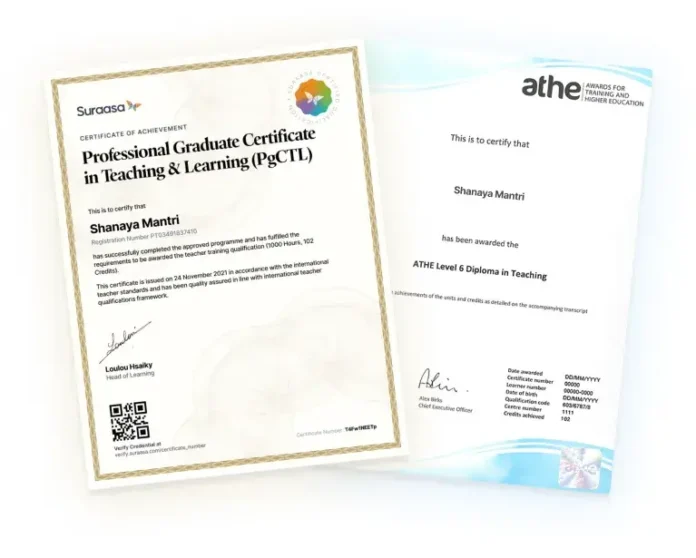
For educators seeking structured guidance on integrating innovative practices into their classrooms, programmes such as PgCTL offer a framework for strengthening instructional competencies alongside technological fluency.
Below is an exploration of some of the most effective AI-driven teaching aids available today, how they function, and their role in building smarter, more engaging classrooms.
1. AI-Powered Lesson Planning Tools
One of the primary challenges for educators is creating engaging, differentiated lessons while balancing workloads.
AI-driven lesson planning assistants can significantly alleviate this burden.
These tools, such as generative AI for lesson design, enable teachers to provide inputs such as learning objectives and curriculum details.
The software then generates structured lesson plans, activities, worksheets, and even assessments tailored to diverse needs. They are a lifesaver for both new educators and those diving into unfamiliar curriculum areas.
Benefits for the classroom:
Reduced time and effort in designing lessons.
Materials tailored to mixed-ability classes for better inclusivity.
Innovative suggestions to create more captivating lessons.
Such tools align perfectly with competencies developed through PgCTL, emphasizing reflective teaching methods and learner-centered approaches, both being key qualities for effective educators.
Suraasa is a platform that aligns well with AI-forward sensibilities and can help you become a holistic educator, balancing the soft skills required to become an educator with the hard skills that are necessary to keep developing as one.
2. Adaptive Learning Platforms
Adaptive learning platforms are game-changing tools in modern education. Using advanced AI algorithms, these systems analyze students’ learning patterns, pace, and comprehension levels. Based on this data, they deliver personalized learning content and adjust task difficulty accordingly in real time.
Why they’re impactful:
- Students benefit from customized learning pathways that maintain engagement.
- Teachers receive detailed analytics to spot misconceptions early.
- Feedback is instant and data-driven to foster growth.
As some of the most dynamic teaching aids available, adaptive platforms go beyond delivering content, they actively learn from students and adapt to meet their unique needs, far surpassing what traditional teaching tools offer.
3. Language and Literacy Support Tools
AI-powered solutions are becoming essential in classrooms where language skills or literacy support are a priority. With features such as text-to-speech conversion, pronunciation feedback, grammar assistance, and comprehension aids, these tools help students overcome learning barriers for addressing linguistic challenges.
How they enhance learning:
- Supporting ESL (English as a Second Language) and EAL (English as an Additional Language) learners seamlessly.
- Promoting inclusivity for students with dyslexia or language difficulties.
- Allowing teachers to track literacy progress through automated assessments.
By integrating these tools into classrooms, schools empower students to achieve greater independence while freeing up teacher capacity for high-quality student interaction and support.
4. AI-Enabled Assessment and Feedback Tools
Assessing students’ work and providing timely feedback can be resource-intensive for teachers, but AI-based assessment aids are changing this landscape. Platforms equipped with natural language processing can evaluate various formats of student work effectively and efficiently. These formats can be quizzes, essays, and short-answer responses.
Advantages for teachers:
- Accelerated grading processes.
- Consistent and unbiased evaluations.
- Actionable performance insights through detailed analytics.
Advantages for students:
- Quicker feedback that reinforces understanding.
- Personalized improvement recommendations.
These tools increase efficiency while simultaneously fostering reflective teaching practices, which is a core focus area for programs like PgCTL. By providing actionable data for both educators and learners to act upon.
AI-driven teaching aids are already making significant strides in reshaping educational practices, offering smarter ways to plan lessons, personalize learning journeys, support struggling students, and streamline evaluation processes. Exploring these technologies could be the next step towards creating truly engaging and future-ready classrooms.
5. Virtual Labs and Simulation Tools
STEM education significantly benefits from AI-powered simulations. Virtual labs offer students the opportunity to conduct experiments in a secure, digital environment, making them especially valuable for schools with limited access to physical lab facilities.
Why they stand out:
- Real-time modeling of scientific concepts
- Risk-free experimentation
- Highly interactive and visually immersive experiences
These innovative tools simplify complex concepts, enhancing learning and retention by enabling students to engage in hands-on activities within a virtual setting.
6. Classroom Management and Engagement Tools
AI is not only transforming teaching methods but also revolutionizing classroom management. AI-augmented tools can monitor participation, analyze behavioral patterns, and propose evidence-based strategies to maintain student engagement.
Examples include:
- AI-enabled cameras that gauge attention levels
- Engagement-tracking applications to identify students requiring support
- Automated reminders or prompts that foster positive behaviors
Such advancements foster a more structured, calm, and focused classroom environment, supporting both students and educators.
7. AI Tools for Creativity and Project-Based Learning
AI-driven creative platforms for designing images, animations, narratives, music, or coding solutions are opening doors for innovation-oriented, project-based learning. These tools encourage learners to explore ideas beyond conventional methods.
How they enhance education:
- Enable students to articulate complex ideas creatively
- Develop essential digital literacy skills
- Reduce the technical workload, allowing more room for creative exploration
These creative solutions are gaining popularity in schools that prioritize innovation and forward-thinking education.
Choosing the Right AI Teaching Aids for Your Classroom
Given the wide array of options available, selecting the best AI-powered teaching aids requires careful evaluation. Consider these factors:
Curriculum alignment
Ensure the tool aligns with educational goals and integrates seamlessly with assessment or curriculum frameworks like PgCTL.
Data privacy and safety
Opt for tools that meet stringent privacy regulations and have transparent data policies.
Accessibility
Prioritize tools that accommodate diverse student needs, including those with disabilities.
Teacher training
Effective use of AI depends on educators’ confidence and expertise. Schools should provide adequate professional development and ongoing support for teacher training.
Looking Ahead: The Future of AI in Education
AI is set to expand the range of teaching aids available further, making classrooms more dynamic, personalized, and efficient. While AI won’t replace teachers, it will serve as a valuable tool in enhancing instructional methods.
By leveraging these tools, educators can create learning environments that foster curiosity, independence, and critical thinking.
Those who integrate AI into their teaching practices now will be better prepared to address the evolving needs of future learners. Whether by exploring cutting-edge digital tools or refining expertise through initiatives like PgCTL, understanding the capabilities of AI teaching aids is crucial for advancing educational progress.